Planning a Potager Garden: Ideas for Every SpaceArticle
April 1, 2026

Planning a Potager Garden: Ideas for Every Space
Couldn’t make it to our most recent Herbal How-To on Planning a Potager Garden? We’re sharing some of the key takeaways from the session, along with the three garden plans, so you can get started at home with confidence this gardening season.
What Is a Potager Garden?
Traditionally inspired by French kitchen gardens, a potager blends edible and ornamental plants in one space. Herbs are woven among vegetables, flowers are added intentionally, and the result is a garden that is both useful and beautiful. Potager gardening also encourages diversity, which can help support pollinators, improve visual interest, maximize space, and allow for continuous harvests through the season.
One of the most important ideas from the class was this: diversity and growing what you love matter more than perfect pairings. A successful potager garden is not about following rigid rules. It is about growing intentionally and creating a space that works well for you.
A Potager Garden Can Work in Any Space
One of the best things about a potager garden is that it can be adapted to many types of growing spaces. Whether you have a balcony, a small urban yard, raised beds, or a larger garden, you can use the same principles to create something beautiful and productive that works for your space.
Potager Ideas for Balconies and Patios
Small-space gardeners can create a productive potager with containers, vertical growing, and compact varieties. Herbs such as thyme, basil, chives, and oregano are excellent choices for smaller setups, while flowers like calendula and nasturtium add beauty and help support pollinators. Containers are also a smart way to keep spreading plants like mint nicely contained.
Potager Ideas for Small Backyards and Raised Beds
In a small backyard, raised beds are a great way to mix herbs, vegetables, and flowers in one manageable space. Edging beds with plants such as sage, oregano, or lavender can help define the layout while making the garden feel lush and layered. Block planting often works better than strict rows, creating a fuller and more natural potager look.
Potager Ideas for Larger Garden Spaces
Larger gardens allow for more structure, with pathways, repeating plant groupings, and layered planting heights helping to bring order and rhythm to the space. A mix of tall, medium, and low-growing plants can make the garden feel abundant while still being easy to navigate and harvest. As we noted in the session, a good potager is not about growing everything; it is about growing what you love to eat and use the most with intention.
How to Choose the Right Plants for a Potager Garden
When planning your potager garden, start with what you actually use and love. Think about the herbs you cook with most often, the vegetables your household enjoys, and the flowers you want to include for pollinators and beauty. The session also touched on the value of thinking about herbs not only as culinary plants, but also as medicinal and aromatic ones.
Some of the herbs highlighted during the class included chamomile, peppermint, lemon balm, fennel, echinacea, thyme, sage, calendula, lavender, tulsi, rosemary, hyssop, and more. Some are especially useful for cooking, some are valued in herbal traditions, and many can be both practical and beautiful in the garden.
Companion Planting Made Simple
Companion planting can sound complicated, but the idea is simple: grow plants together so they support one another. In the class, we focused on three core principles: supporting healthy growth, reducing pest pressure, and attracting beneficial insects.
A few easy examples included tomatoes paired with basil, calendula, chives, or nasturtium; carrots grown near onions, dill, or lettuce; and cucumbers and squash planted alongside dill, nasturtium, or borage. Herbs like basil, thyme, and chamomile were also highlighted as especially helpful companion plants in a mixed garden.
We also shared a few combinations to watch out for. Mint is best grown in containers; fennel can inhibit nearby plants; onions and beans may not thrive together; and potatoes and tomatoes can share disease risks. Above all, healthy soil, proper spacing, and observation matter just as much as plant pairings.
Simple Care Tips for a Productive Potager Garden
A thriving potager garden depends on good care as much as good planning. Mulching early can help reduce weeds, dense planting can help shade the soil, and watering deeply and less often encourages stronger root growth. Containers dry out faster than in-ground beds, so they may need more regular attention. Harvesting herbs often, pruning when needed, and succession sowing crops like greens can all help keep the garden productive throughout the entire season.
We also touched briefly on seed saving as a simple and rewarding next step for gardeners. Easy plants like beans, lettuce, marigolds, and calendula can be a great place to begin. Let the seeds mature and dry fully, then store them in a cool, dry place for future growing.
3 Potager Garden Plans to Get You Started
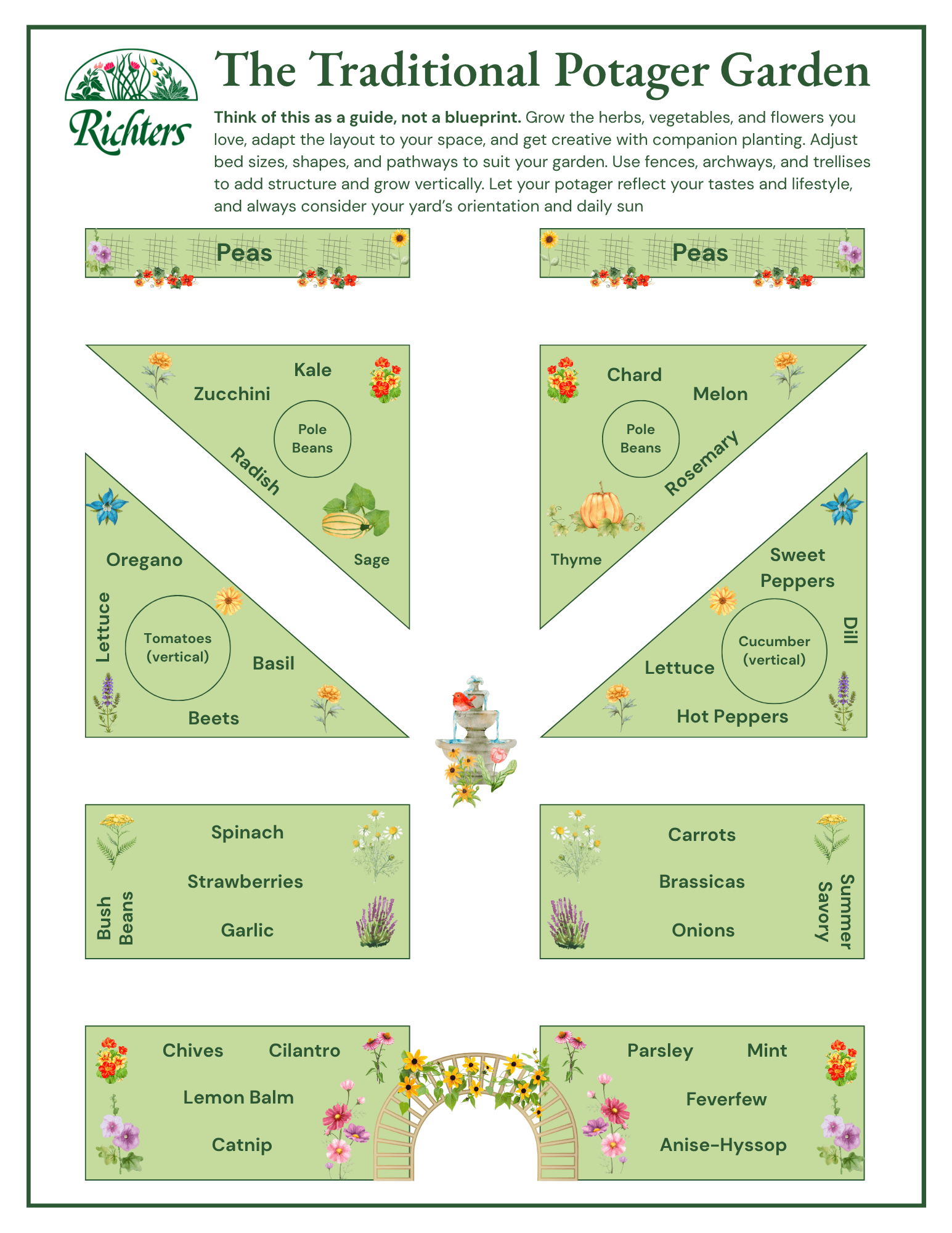
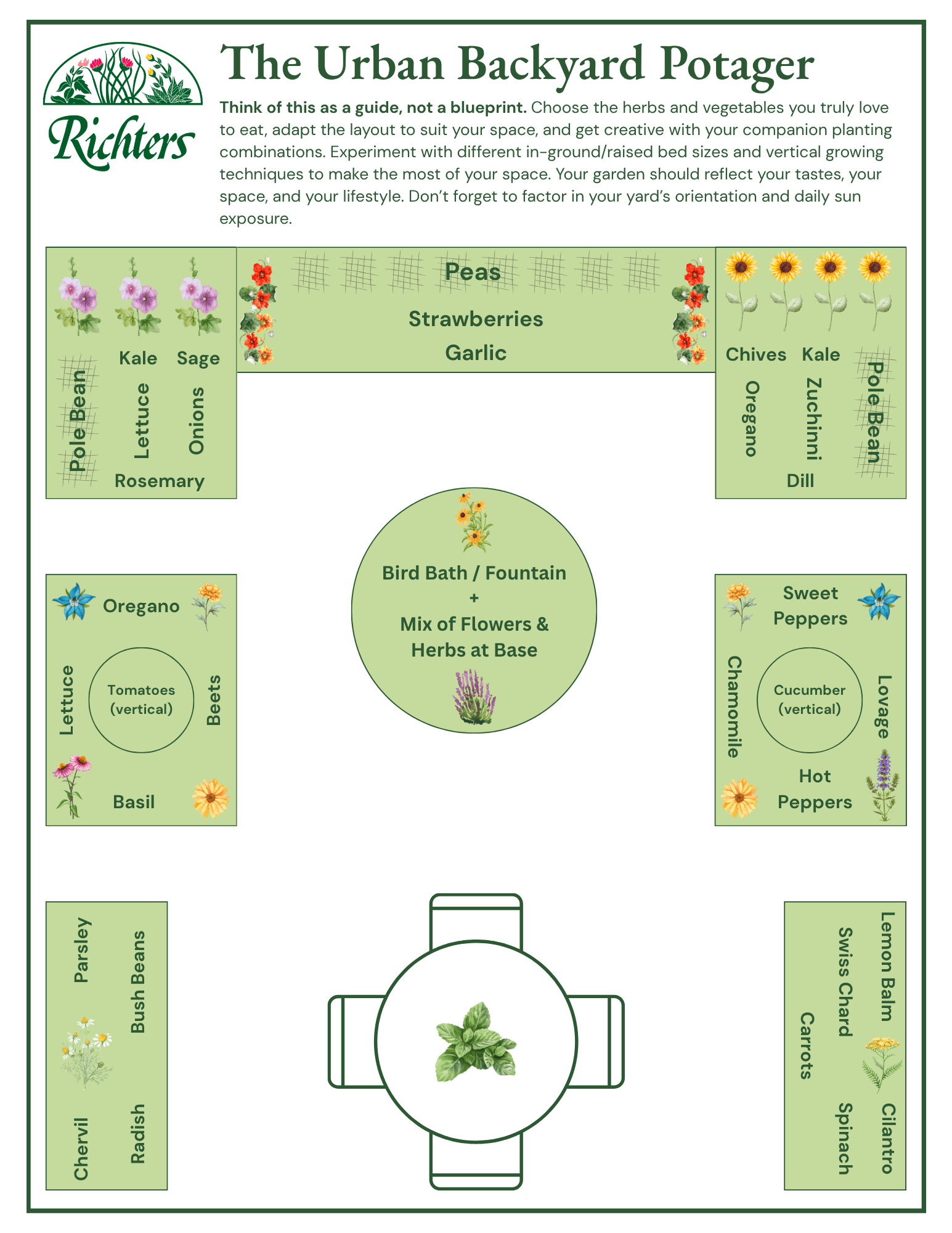
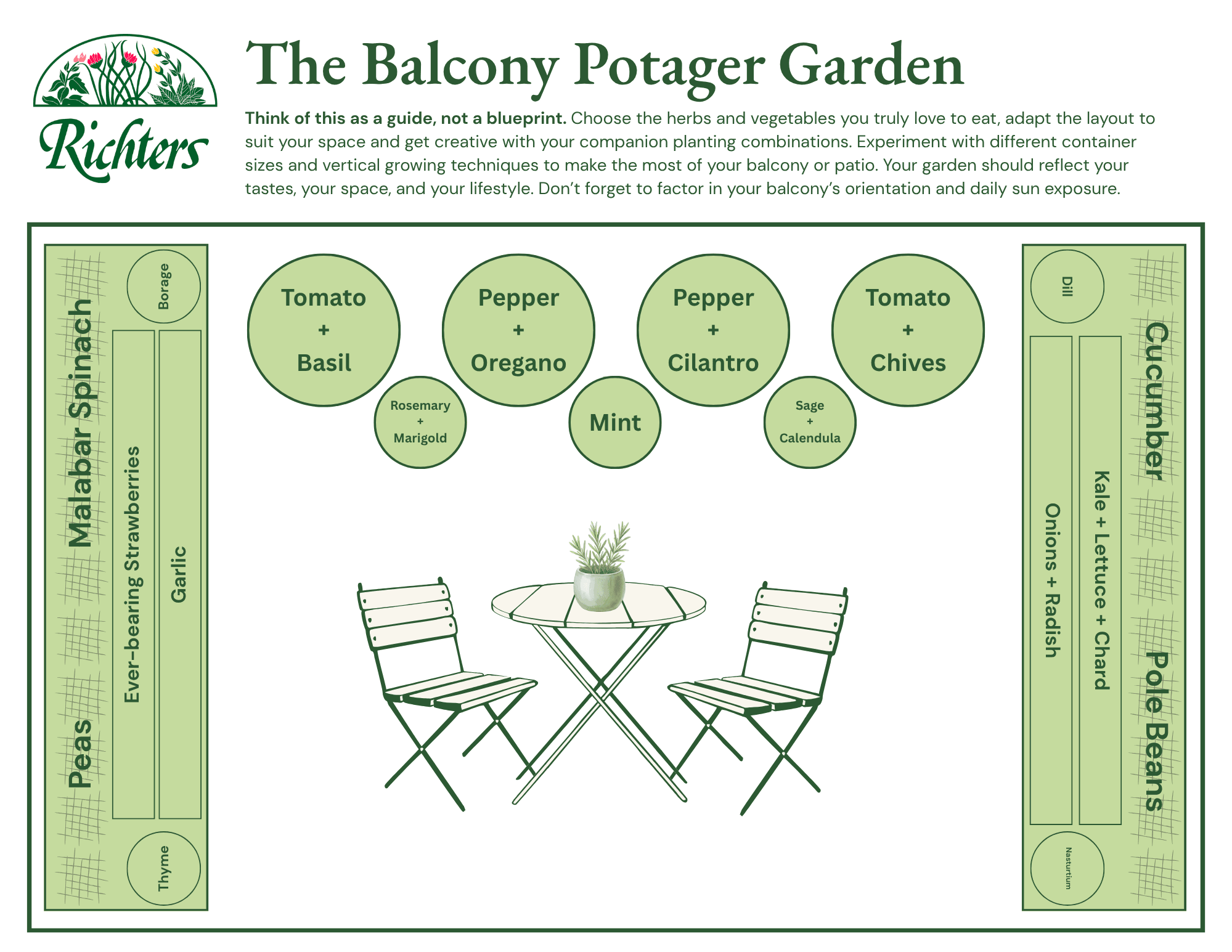
To make it easier to get started, we’re also sharing the three garden plans from the Herbal How-To session. These layouts were created to help gardeners work with the space they have, whether that means a balcony, a raised bed, or a larger structured garden.
These plans are meant to be practical starting points, something you can build from, adapt, and make your own.
1) The Traditional Potager Garden
 2) The Urban Backyard Potager Garden Plan
 3) The Balcony Container Potager Garden Plan
 Start Small and Grow with Confidence
If there were one message we hoped guests would take home, it was this: start small, grow what you love, and do not get too caught up in rules. A potager garden is not a formula. It is a relationship, one that grows over time through observation, experimentation, and enjoyment.
If you missed the session, we hope these ideas and garden plans help you get started on a potager garden that works beautifully in your own space.
Happy growing from all of us at Richters!